Showing posts with label low-stakes writing. Show all posts

Friday, December 06, 2013

Ubuntu

Yesterday Nelson Mandela died, and the world lost one of its greatest ever agents of peace. Meanwhile, more locally, during the past few weeks several people very close to me have dealt with the deaths of too many loved ones to count: a father, a mother, and so, so many friends (one covered with once-soft black fur). It's been a very rough month, and I don't believe I've handled it as well as I might have. I don't think I've been as present as I could have been; I think I've been too self-absorbed. I've been sleepwalking, but I feel as though I'm coming awake.

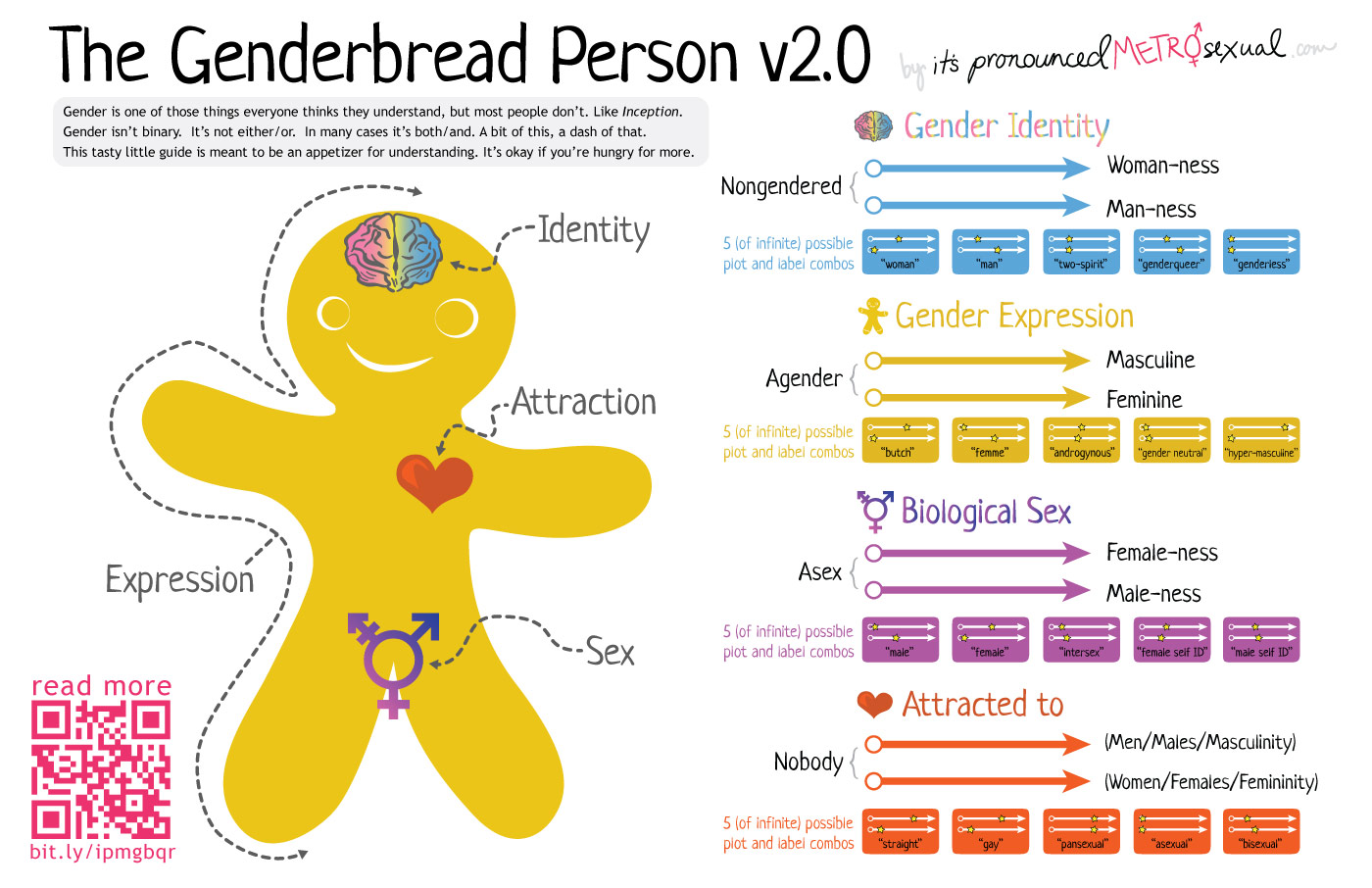
Yesterday my HON 479 students put on their long-awaited workshop on diversity, inclusion, and equity, focusing on the ways in which these manifest in religion, race, and gender. They worked with a small audience comprising about ten faculty and staff and a couple of their fellow students. The group was small, but it was engaged. The conversations we had were rich, heartfelt, authentic. The event was enlightening, meaningful, and moving. Working with wonderful visuals (Like the Cooper Center's "Racial Dot Map" and It's Pronounced Metrosexual's "Genderbread Person v. 2.0") and excellent activities ("The Cold Wind Blows," religious insensitivity role-plays, and a few rounds of reflective writing on our own gender and racial identities), the students' workshop was substantially better than the awful diversity and inclusion workshop I took part in earlier this year.

At some point late in yesterday's workshop's proceedings, while one of my students was talking about her intellectual journey as a devout Christian completing an academic degree in religious studies, I had a sudden feeling of self-awareness. It was a feeling of being and becoming all at once. It was also a feeling of oneness, of unity with the people I'd just shared the past two hours with. Though our group was small, we represented several races and ethnicities, several religious traditions, several gender and sexual identities. We offered a substantial cross-section of our society, and we were having civil...nay, collegial, even cordial...conversation on some of the most difficult topics for anyone to talk about.

On the way home from campus, NPR told me that Mandela had died, and I teared up in the car. I thought of South Africa's Madiba, and his friends and colleagues in struggle. I thought in particular of Archbishop Desmond Tutu, for whom I have more respect than nearly anyone else. In his incredible book No Future Without Forgiveness Tutu speaks of the concept of ubuntu, a Bantu term referring to our human interconnectedness, which Mandela once described as follows:

"A traveller through a country would stop at a village and he didn't have to ask for food or for water. Once he stops, the people give him food and attend him. That is one aspect of Ubuntu, but it will have various aspects. Ubuntu does not mean that people should not enrich themselves. The question therefore is: Are you going to do so in order to enable the community around you to be able to improve?"

In the short time I had before I had to leave again to meet with my writing group I sliced onions for the simple meal of lentils and rice I would make when I came home again, and I read the first lines of the end-of-semester reflection one of my HON 479 students had handed to me just before helping to host that afternoon's workshop. "Dear Patrick, I hope you don't find this format too informal," it begins. "I tailored my response with you in mind, so I thought I might address you directly." In tandem with her humble letter (which brought me to tears by the time I was done reading it) was a hand-made jigsaw puzzle the student had crafted.


I had no time to assemble more than the frame of the puzzle before leaving, but completing the puzzle was the second thing (after starting dinner) I did on my return home.

"You may start to notice (or maybe you have finished) that the puzzle is a tree. I chose a tree because I think it represents various aspects of the IHAD program."


"Now, I'm sorry to deprive you of the satisfaction of putting that last piece in the puzzle, but I did not lose it and neither did you. How frustrating is it to complete a process yet still feel as though you are missing something?...Thank you for going through this puzzling process with me today."

I've recently taken to origami, more seriously than my halfhearted efforts in the past. I am struck in particular by the beauty and meaning of the kusudama, or "medicine ball," a form that's meant to ward off evil and encourage health and strength. I made a kusudama a week ago for a grieving loved one, and I'm making more now, for friends, for family, for people I love. I fear I'll never stop, for right now I feel a sort of universal love which I hope I'll never lose.


It's a new day. As this day begins, please take a moment to love yourself, to love each other, to find peace and joy in all that you do. Enjoy being, but keep becoming.

Monday, September 23, 2013

I just flew in from Laredo, and boy...

Highlights from the past week or so (craziness)...

Last Monday through Wednesday I attended the 10th annual fall meeting of the Carolinas Writing Program Administrators at Wildacres. It was my 7th (!) such meeting. I'm getting old. We hosted Doug Hesse, fantastic scholar and teacher of writing and all-around good guy. He led us in a morning of low-stakes reflective writing activities challenging us to rediscover the personal in our professional writing. It was refreshing and calming and fun...fun enough for a few of us (including me) to give up our afternoon speaking slots to free up more time for writing and reflecting.

Who wants to hear me natter on about the effect of LaTeX use on math students' writing rhythms, anyway?

I was then back home (well, in Asheville, anyway) for about 48 hours before leaving town again, but not before helping to host the Honors Program's first world café, an event attended by 66 of our 80 first-year Honors students. Students had conversations about questions we'd designed to elicit thoughtful responses ("What events have shaped your life? Your parents' lives? What events will shape your children's lives?" "What defines community?"). After considering these questions the students were asked to generate questions of their own for other groups to answer...and then we asked them to do it again, leaving each others' company after the final round of student-generated questions were asked.

Late the next morning I left for Texas. I spent a day and a half in Laredo running a workshop on writing in the STEM disciplines at Texas A&M International University (TAMIU). I'd done a similar workshop at TAMIU almost exactly a year before though last year's group was a bunch of middle-school and high-school math educators and this year I worked mostly with TAMIU faculty, with a few Laredo Community College folks thrown in for good measure. I have to say that I'm thoroughly impressed: both workshops were among the most engaged and engaging I've ever led. This last group in particular was stellar, 24 people clearly dedicated to learning more about authentic disciplinary writing. I was particularly excited to speak with Quinaria, a writing instructor who serves the university as one of their first-year experience (FYE) coordinators. Their FYE courses are tied to introductory-level disciplinary courses (like Calc I and General Chemistry), each of which is housed in a designated first-year learning community. There are some course-to-course articulation issues, but it seems like they're dedicated to making their system work. It can't be any crazier than out 179 system.

Back at home for a couple of weeks now. Two weeks from this past Saturday I head up the mountain to Boone for the NC Honors Association conference where my colleague Samuel joins me in speaking about our 179/479 crossover. Samuel and I each have a student presenting, too. I'm excited to see how well my student's talk goes over; Fawn will be speaking about her final project from Oulipo back in the spring, for which she crafted randomly-generated dictionary entries in an effort to satirize the most lofty lexicon ever written. After that it's back to Laredo for a few days, and then to Wilmington for this year's NC English Teachers Association conference...

...always more in store!

Friday, August 30, 2013

Six-word summaries of Appiah's Cosmopolitanism

In class on Thursday I asked my HON 479 students to close with a low-stakes writing exercise in which they summarized Kwame Anthony Appiah's Cosmopolitanism in six words. This exercise is designed to encourage students to get to the meat (or vegetarian meat substitute) of the matter clearly and concisely.

The outcome? The students appear to have learned much from Appiah. They might, however, need help in learning to count.

Respect and do good amidst difference.

Respecting similarities and differences for peaceful coexisting

Understanding different values and being curious.

Global Citizenship requires fundamental change and understanding

Humans can learn from each other.

We can agree if we talk

Learn about others, respect their choices

get a liberal arts education, y'all.

Listen to others, don't be isolated.

Be an accepting, open-minded, thoughtful person/

convivencia, living in harmony as humans

modernity in thought action, no ambivalence

The path to coexistence is conversation.

positivism; cultural identity; imperialism; alternative; curiosity

Try your best to understand each other.

Wednesday, April 03, 2013

Lie to me

It's been a while since I've written here; it's taking a particularly fun exercise I tried out in my Oulipo class to get me back.

Today we played a game I called "Lie to me." Inspired by the byzantine yet convincing fictions Georges Perec creates in Life: A user's manual, I asked my students to spend ten or twelve minutes in crafting the beginnings of a bit of fiction in which they lie their asses off, given the following generic set-up: "You are a _______________ , with a(n) _______________ who hopes to _______________ while in _______________ ." For each blank the students drew cards: the first card gave them a character ("heroin-addicted airline pilot," "one-armed race car driver," etc.), the second accoutred them with an object ("a shard of the cross Jesus hung on," "an ounce of unrefined uranium ore," etc.), the third gave them a purpose ("publish a Pulitzer Prize-winning drama," "escape persecution by political rivals," etc.), and the fourth gave them a location ("Jakarta," "Prague," etc.). I joined in, writing as a homeless classically-trained violinist with a blind Bengal tiger cub who was living in New York and trying to solve the Riemann Hypothesis.

In the spirit of March Madness, the students advanced their stories through quarterfinal and semifinal rounds, ending with a competition between an expert on 17th-century Russian history and a deposed Latin American president. "It's like the darkest ever episode of Dora the Explorer," one of the students said about the latter story, written largely in Spanglish.

Fun times! I'm definitely going to have to try this constraint out again in a future class.

Wednesday, February 27, 2013

Update on Loftyness

Well, I've done it. I've taken the first paragraph from Italo Calvino's If on a winter's night a traveler (the book we recently finished reading together in Oulipo) and applied to it the five loftyizing constraints from the previous post, first one at a time and then all at once. Each individually meets with some success, but the overall effect is quite convincing. Great fun! Please check them out:

Original, the first paragraph from Italo Calvino’s If on a winter’s night a traveler:

You are about to begin reading Italo Calvino’s new novel, If on a winter’s night a traveler. Relax. Concentrate. Dispel every other thought. Let the world around you fade. Best to close the door; the TV is always on in the next room. Tell the others right away, “No, I don’t want to watch TV!” Raise your voice – they won’t hear you otherwise – “I’m reading! I don’t want to be disturbed!” Maybe they haven’t heard you, with all that racket; speak louder, yell: “I’m beginning to read Italo Calvino’s new novel!” Or if you prefer, don’t say anything; just hope they’ll leave you alone.

Germanic capitalizing, a "fair coin" flipped to decide whether or not to capitalize a given noun:
You are about to begin reading Italo Calvino’s new novel, If on a winter’s Night a traveler. Relax. Concentrate. Dispel every other thought. Let the World around you fade. Best to close the Door; the TV is always on in the next Room. Tell the others right away, “No, I don’t want to watch TV!” Raise your Voice – they won’t hear you otherwise – “I’m reading! I don’t want to be disturbed!” Maybe they haven’t heard you, with all that racket; speak louder, yell: “I’m beginning to read Italo Calvino’s new novel!” Or if you prefer, don’t say anything; just hope they’ll leave you alone.

Inverting, a "fair coin" flipped to decide whether or not to invert the subject and verb in a given sentence:
You are about to begin reading Italo Calvino’s new novel, If on a winter’s night a traveler. Relax. Concentrate. Every other thought dispel. Let fade the world around you. Best the door to close; the TV is always on in the next room. The others tell, right away, “No, I don’t want to watch TV!” Raise your voice – they won’t hear you otherwise – “I’m reading! Disturbed I don’t want to be!” Maybe they haven’t heard you, with all that racket; louder speak, yell: “I’m beginning to read Italo Calvino’s new novel!” Or if you prefer, don’t say anything; just hope leave you alone they will.

Theethouizing, “you” has been changed systematically to “thee” or “thou,” and “your” to “thy” or “thine":
Thou art about to begin reading Italo Calvino’s new novel, If on a winter’s night a traveler. Relax. Concentrate. Dispel every other thought. Let the world around thee fade. Best to close the door; the TV is always on in the next room. Tell the others right away, “No, I don’t want to watch TV!” Raise thy voice – they won’t hear thee otherwise – “I’m reading! I don’t want to be disturbed!” Maybe they haven’t heard thee, with all that racket; speak louder, yell: “I’m beginning to read Italo Calvino’s new novel!” Or if thou preferst, don’t say anything; just hope they’ll leave thee alone.

Oloizing, “O” and “Lo!” placed at the start of randomly selected sentences and independent clauses:
You are about to begin reading Italo Calvino’s new novel, If on a winter’s night a traveler. Lo!, relax. O, concentrate. O, dispel every other thought. Let the world around you fade. O, best to close the door; the TV is always on in the next room. Lo!, tell the others right away, “O, no, I don’t want to watch TV!” O, raise your voice – they won’t hear you otherwise – “O, I’m reading! I don’t want to be disturbed!” Lo!, maybe they haven’t heard you, with all that racket; speak louder, yell: “Lo!, I’m beginning to read Italo Calvino’s new novel!” Or if you prefer, don’t say anything; just hope they’ll leave you alone.

Adjectival inflating, every adjective replaced by its longest synonym appearing on thesaurus.com:
You are about to begin reading Italo Calvino’s uncontaminated novel, If on a winter’s night a traveler. Relax. Concentrate. Dispel every supplementary thought. Let the world around you fade. Best to close the door; the TV is always on in the subsequential room. Tell the others right away, “No, I don’t want to watch TV!” Raise your voice – they won’t hear you otherwise – “I’m reading! I don’t want to be disturbed!” Maybe they haven’t heard you, with all that racket; speak louder, yell: “I’m beginning to read Italo Calvino’s uncontaminated novel!” Or if you prefer, don’t say anything; just hope they’ll leave you alone.

The whole enchilada: all five constraints applied simultaneously:
Thou art about to begin reading Italo Calvino’s uncontaminated novel, If on a winter’s Night a traveler. Lo!, relax. O, concentrate. O, every supplementary thought dispel. Let fade the World around thee. O, best the Door to close; the TV is always on in the subsequential Room. Lo!, the others tell, right away, “O, no, I don’t want to watch TV!” O, raise thy Voice – they won’t hear thee otherwise – “O, I’m reading! Disturbed I don’t want to be!” Lo!, maybe they haven’t heard thee, with all that racket; louder speak, yell: “Lo!, I’m beginning to read Italo Calvino’s uncontaminated novel!” Or if thou preferst, don’t say anything; just hope leave thee alone they will.

And yes, they pay me to do this, folks. How awesome is my job?

Midsemester musings

We're about halfway through the semester now, and I have to say I'm enjoying teaching more than I have for a few years now. I love both of my classes and am having tremendous amounts of fun with both of them. The Calc III class is the most engaged math class I've had in several semesters: the students are eager, active, and awesome. And Oulipo...I don't know how we can fit so much fun into three fifty-minute periods each week. I wish we met for longer...

In Calc III I've been starting each Wednesday (the dreaded "hump day") with a contemplative exercise of some sort, much like the first, about which I wrote a few weeks back. The purpose of each exercise is to ask students to put themselves in a positive frame of mind, to reflect on something that's lifting them up and to cast aside something that's holding them down. Today I asked them each to write a simple haiku (no season indicators or "turns," just a simple 5-7-5 syllabic scheme) about their current state of mind. Though I saw a lot of counting on fingers, I also saw a lot of earnest scribbling. Though I don't collect a single word the students write in response to these simple prompts, I have no doubt most (if not all) of the students are taking the assignments seriously, and I hope that they're having salutary effects.

In Oulipo the most recent out-of-class assignment was to write a "lofty" poem elegizing a quotidian object. Each of us selected an everyday object that was then randomly selected by one of the others in the class. We were then each tasked with writing verse that we deemed "lofty" in some fashion, extolling the virtues of the object we'd been assigned. For many people "lofty" meant "classical," and several student wrote poems in a romantic style, with rime and meter appropriate to an 18th-century-or-earlier bard.

After we'd workshopped our poems and read a number of them out loud, we talked briefly about conventional devices we might make use of to "loftyize" a piece of non-lofty writing and as a group came up with the following:

  1. Germanic capitalizing: selectively or systematically capitalize nouns throughout the piece.
  2. Inverting: selectively or systematically invert the standard modern subject-verb order throughout the piece.
  3. Theethouizing: selectively or systematically turn "you"s into "thee"s and "thou"s throughout the piece.
  4. Oloizing: selectively or systematically insert "o!"s and "lo!"s throughout the piece.
  5. Adjectival inflating (a nod to n + 7): selectively or systematically replace each adjective with its longest synonym appearing in an agreed-upon thesaurus throughout the piece.
I'm going to try these out on a piece of non-lofty writing, maybe something from Jon Rogawski's Calculus...? Results posted soon...

Wednesday, February 06, 2013

Constraint and contemplation

I thought I might mention a couple of the activities I asked my students to take part in today.

The first was a simple freewrite, with an even simpler summative exercise at the end. I asked my Oulipo students to freewrite for five minutes on the ways in which they've noticed their writing to be affected by constraint. Once they'd completed this freewrite I asked them each to identify three words which gave some indication of their freewrite's content and tone. They then shared these words on the board:


I joined the students in this exercise. I was intrigued that my three words ended up being "pattern," "unknown," and "death." The first was unsurprising but the last two were unexpected. I reasoned (if one can call analysis through freewriting "reason") roughly as follows: "we seek patterns in everything we see, including heavily constrained literature, because patterns have predictive power and allow us to extrapolate from the known present and past to the unknown future; perhaps the most compelling unknown is death...can the patterns we find in constrained poetry help us understand even this ultimate unknown?"

We'll have a chance on Friday to discuss the words above more thoroughly. So far we've only talked briefly in pairs about our ideas. I'm looking forward to these upcoming conversations.

The other activity I wanted to mention is a contemplative exercise I asked students in both classes to complete. Knowing full well that Wednesday is the longest and most stressful day for many folks in academia (students, faculty, and staff alike), I wanted to do something to help alleviate the stress. Yesterday, while sitting in the first session of my first faculty/staff learning circle since Fall 2011 (it's been too long!), I thought up the following activity, though I'm sure it's not original to me:
  1. Take out two scraps of paper.
  2. On one of them, write something that's stressing you out or bringing you down.
  3. On the other, write something that's bringing you joy or making you smile.
  4. Ball the first scrap up into a tiny origami boulder and chuck it into the recycling bin lovingly provided in the middle of the room.
  5. Fold the second scrap neatly and tuck it into your pocket, where you're likely to find it once, twice, thrice, throughout the rest of the day, a gentle reminder of something you should be happy about.
It's a simple exercise, but in both classes it elicited a great response. People in both classes gleefully threw their stressors into the recycling bin in a hail of discarded worry. ("This feels really therapeutic," said one of my Oulipo students.) I noticed smiles and nods from many folks as they put their happy thoughts away. The activity took three minutes out of class time, but I believe it went a long way to establishing a sense of community and a more relaxed state of mind in which we would all be a bit more receptive to new ideas. I might have to make this, or something like it, a regular Wednesday occurrence.

Wednesday, January 23, 2013

I have a Beau-présent for you!

I'm sitting in my Oulipo class at the moment, updating as my students take part in their first peer review activity of the semester, reading over one another's beaux-présents, poems written using only the letters appearing in the name of the poem's dedicatee (in this case, the author herself or himself). For shits and grins, here's Mathematica's representation of my beau-présent, as a finite-state automaton:

I'm curious to see how these turn out! Perhaps I'll ask permission to share one or two of the resulting poems once they're done.

It's been a bit since I mentioned my other course this term, Calc III. Please know this omission does not indicate dissatisfaction; on the contrary, this section of the course is by far the most engaged and engaging section I've ever taught. (I think the presence of several really eager nontraditional-aged students helps!) I'm just a bit more outspoken regarding the Oulipo class owing to its newness.

More soon!

Friday, January 18, 2013

n + 7: variations

Today's Oulipo class began with an (n+7)-like exercise: I chose a single sentence from Mark Dunn's Ella Minnow Pea (the first of the books we're reading for the course) and generated a number between 1 and 50 using Mathematica. (The number 24 was chosen.) I then asked students to turn to that page in a book other than Ella Minnow Pea (I provided such a book to those who didn't have one on them, including Peggy Meszaros's Self-authorship: Advancing students' intellectual growth and Carl Sagan's The cosmic connection) and perform the following algorithm: for the kth noun in the original sentence beginning with a given letter x, find the kth noun in the other text beginning with x and replace the original noun with this new one. The sentence I selected to start with had two words starting with "p" and three starting with "c," necessitating a little searching (a couple of students had to look long and hard for a "w" word, too).

We let ourselves modify number in order to preserve grammatical correctness. Other than this, we made all changes verbatim. The results are below, beginning with the original sentence as it appears in Dunn. See if you can tell which one came from a calculus textbook, and which from the Bible. Carl Sagan's led to the most mirthful replacements, I think.


Parents: you may wish to help your children absorb these new words by turning the process into a game of some sort, simple flash cards also constituting a tried and efficient course.

Policies: you may wish to help your chapters absorb these new welfares by turning the precedent into a government of some setting, simple flash congruences also constituting a tried and efficient care.

Partnerships: you may wish to help your conisiderations absorb these new ways by turning the professor into a going of some script, simple flash cases also constituting a tried and efficient challenge.

Privileges: you may wish to help your challenges absorb these new works by turning the partner into a group of some story, simple flash cars also constituting a tried and efficient claim.

People: you may wish to help your city absorb these new ways by turning the presence into a gateway of some sake, simple flash catastrophes also constituting a tried and efficient condition.

Packages: you may wish to help your courses absorb these new worlds by turning the place into a Georgia of some sorrow, simple flash clouds also constituting a tried and efficient child.

Paths: you may wish to help your c(t) absorb these new ways by turning the planet into a graph of some set, simple flash curves also constituting a tried and efficient cos(t).

Planets: you may wish to help your chapters absorb these new ways by turning the purpose into a generalization of some size, simple flash circles also constituting a tried and efficient confusion.

Points: you may wish to help your ciphers absorb these new writings by turning the place into a gear of some solution, simple flash cases also constituting a tried and efficient change.

Pies: you may wish to help your charts absorb these new ways by turning the passenger into a group of some slice, simple flash classes also constituting a tried and efficient category.

Pioneers: you may wish to help your criticism absorb these new women by turning the president into a genitalia of some salutation, simple flash Chicagos also constituting a tried and efficient castration.


By the way, I managed to get this class moved; starting this coming Wednesday we'll be meeting in the Honors seminar room, a windowless affair about fifty feet from my office door. It's bit dark and dreary for my tastes, but the kids seem to like it. It'll be nice to have a room where we can actually sit in a circle.

Monday, January 14, 2013

Day One, Spring 2013

My first class of 2013 went well! I've got 31 folks enrolled in Calc III, and one more itchin' to get in.

We met today for the first time and began with a brief low-stakes writing activity, a brief version of the now-common object-ive writing activity elaborated in the blog 3 friends, 30 things, 90 stories which I wrote with my colleagues Libby and Mariposa (and yes, we're doing it again this coming April!). This broke the ice, got people talking, and got everyone up to the board to jot a few words down. After that, we had just enough time to go over the syllabus before breaking for the day.

A minor rant: I hate hate HATE the configuration of Rhoades 213, the windowless pit in which I teach both of my courses this term. The "desks" consist of modular table-lets which each accommodate a single chair. They're small and mobile and ideal for gathering together in small groups to form a place for collaborative learning...if only they weren't bolted together, side-to-side, in phalanges of three or four per row. This static and stultifying configuration is nothing short of asinine. Only a pedagogical peewee would think that this structure of classroom is helpful. I am appalled.

How will it work out? Stay tuned...I've got the first meeting of my Honors seminar on Oulipo in that same classroom in about 30 minutes...

Tuesday, December 04, 2012

Wrapping up

The Fall 2012 semester's nearly at its end. Today is "reading day," so things are a bit quiet over here in the Honors Program offices. So far I've spent the morning reading over my HON 179 students' latest daybook writings, including their illustrations of their personal writing processes (more on those in a minute), their lists of characteristics of a liberal arts education, their reflections on the lasts couple of chapters of Ong's Orality and literacy, and their "final thoughts" for the term.

These final thoughts are surprising ones. Quiet as many of the students are (it's one of those classes where I've had to say, not infrequently, "anyone not named 'X,' 'Y,' or 'Z,' please chime in!"), it's been hard for me to judge just how they've felt about our readings, our conversations, our world cafés (more about those in a moment, too). Overwhelmingly, though, the final thoughts suggest solid engagement, satisfaction with the way the course has gone, and great strides in learning and self-awareness. I'm gratified!

About those process drawings: Libby, one of my awesome colleagues at East Carolina University, introduced me to this activity a couple of years ago when I went to ECU to take part in the "WACademy" faculty development series she's been running down there for a few years. Respondents are asked to draw their writing processes in pictures: what is it they do when they set themselves up for a major writing project? What's the next step, the next, the next, and the last (if a last step really exists)? (Incidentally, Libby's also the one who first turned me onto daybooks. Many thanks, Libby!)

I loved my students' responses to this in-class activity! Of course, they are Honors students, so they're bright and inventive and yadda yadda yadda, but wow! were these process drawings incredible. Some were little more than sketches with sparsely-drawn stick figures, heavily annotated with explanatory text (including "Cheez Its," "brain," and "blank document"). Others were highly elaborated cartoons of world-making wordsmithery. Some students offered strongly constrained step-by-step processes, and others were more amorphous, one "step" blending into another seamlessly. The variety was fantastic. I hope to gain some of the students' permission to repost their work here.

About those world cafés: I've been involved in a few of these events in the past and have always gotten a lot out of them (enlightenment, amusement, and new friendships), but until this term I'd yet to use them in class. However, I ran two in HON 179 this term (the first on truth and proof, the second on the nature of a liberal arts education), and both seemed to go well. In particular, the conversations the two generated were more open and robust than those occurring in any other class meeting. The world café format got the students' juices flowing. I'm definitely going to use the method in all future classes (math classes included!).

For now, I'm going to get a start on reading the final drafts of the HON 179 students' research papers. Writing on the roots of Ebonics, the benefits of restorative justice, the parallels between epic heroes and comic book superheroes, and many more topics, these papers have proven fascinating.

Tuesday, October 30, 2012

In absentia

It's been a long, long day, and I'm in a particularly honest mood.

I'd like to I apologize for being somewhat gone from this space; I've got no excuse, only explanation. Namely, there's a lot going on, both in my personal life and in my professional life. One or the other I can handle, singly; when the two come together...well, there you have it...

I've much, much more to say about a great many things, including the Honors Program (going well; it's a lot of fun), my two classes (also both going well, I feel, with some ups and downs), the curriculum review (grrrr...), several trips I've made since my last post (lots of fun, and lots learned, on all of them)...but given my mood at present I don't think it would be wise to say much more.

In brief...

Honors Program: I'm learning as I'm going, but having a blast. The students are great. I'm growing into the job, but I hope it can't be said that I'm afraid of making a few changes where changes are called for. The tone I'm trying to strike is one of anti-elitism.

My two classes: my HON 179 is quiet. I'm working on that. My Complex Variables class is fun, a mix of math majors, physics majors, and a few odd engineers and chemists. We're making our way through Churchill and Ward, slowly but surely. It's not the smoothest run I've ever made, but it's the first time I've taught the course (ever!), so I'm willing to make a few mistakes here and there.

The curriculum review: in the words of the late, great Rodney King: can't we all just get along? Into this program (over the past 19 months or so) I've put several hundreds (if not thousands) of hours; I've written hundreds of pages of proposals, meeting minutes, and position papers; I've attended god knows how many meetings...and I fear the entire process may amount to nothing because a few folks seems unwilling to compromise. Color me disappointed right now. We'll see what happens next...

Trips: since posting last, I've been to Laredo, Wildacres, Charlotte, Roanoke, and DC (am I missing anything), doing faculty development for high school math teachers and university faculty, speaking on 3x30, and trying to convince the American Mathematical Society's Committee on Education that yes, we should be trying to get our students to write more. Et cetera. I'm tired of traveling. It's time I stayed home.

More later. Much more. For now, I'd best be off to bed.

Thank you all for reading.

Saturday, September 01, 2012

A little WTL

It's Labor Day weekend, and I'm getting a good start on it by responding to my HON 179 students' latest reflections. The prompt for these reflections (ostensibly in response to Chapters 7-9 of Tutu's No Future Without Forgiveness) asked the students to "think about an incident in your past in which actual, literal verbalization of some kind (monologue, dialogue, or multilogue) helped you achieve resolution. What was it about the act of verbalization itself that proved therapeutic? Can you describe how it made you feel, and why it made you feel that way?" I made sure they knew I wasn't trying to pry; I let them know they need not describe the precipitating incident itself, but only the means by which it was resolved.

I'm only halfway through reading these reflections, and already I've made two crucial observations.

1. The students inherently understand the idea behind writing-to-learn (or at least communicating-to-learn), whether or not they're able to put it in those terms. "I actually have to stop and think to figure out exactly what is making me so mad so that I can explain it" says one student about talking things out, "I was able to organize my thoughts on the matter better" says another, and "making your complaints or confessions intelligible allows a more efficient and complete resolution" says a third. Though they've all phrased it in different ways, they've all hit on the fundamental basis of writing-to-learn. As I wrote back to these students, when writing we have to be able to put our thoughts into words and sort those words into meaningful sentences and paragraphs. This very act helps us to explore our thoughts. You don’t just use writing as a means of communication; you use it also as a means of exploration and discovery.

2. The students' writing is dramatically better when they're writing about something deeply personal and not simply academic. Without exception so far, every student's paper has been equal or superior to her or his previous reflections. This observation is nothing new: no doubt the personal stake the students feel in this piece motivates them to perform more ably. It's clearer than at any earlier point this term that I've got some great writers in this class.

On to the second half...

Saturday, June 30, 2012

A Thoreauly deep post

I subscribe to Poem-A-Day, a service that, as its name implies, sends one a poem each day, usually around noon. I just received today's, a brief epigrammatic couplet from H.D. Thoreau, which struck me soundly:

My life has been the poem I would have writ
But I could not both live and utter it.

Why so striking? This is precisely how I've felt about this blog for the past several months: I've been so busy doing all the things that whenever I've managed to corner a little time to write about them and reflect on them, I'm too exhausted to think straight.

Yet reflection is essential, and action without reflection is chaos. I'm going to try to reflect more often.

Tuesday, April 10, 2012

3 friends, 30 objects, etc.

For the past 10 days, my friends Libby and Mariposa (two academic writing specialists) and I have been posting daily on our blog 3 friends, 30 objects, 90 stories, our rendition of a reflective writing exercise described by composition scholars Doug Hesse, Nancy Sommers, and Kathleen Blake Yancey. This exercise (which, as the blog's title suggest, is now one-third of the way through), described more fully here, has proven to be one of the most rewarding of my recent career.

Though we'd originally meant for each of us to write for 30 minutes a day, on some days I've worked for three or more hours on what I'd like to say, drafting and redrafting, tweaking the words until they're just so. On the whole, it's making me a better writer. How could it fail to, given that I'm intentionally devoting so much time to it?

It's healthy. I've written some of the best poems I've written in a long time. I've shared openly wonderful memories from long ago I've never shared before. I've learned a great deal about two close friends. The whole experience has been calming, centering, and enlightening.

I strongly recommend this exercise to any person hoping to learn more about herself...and to any friends hoping to learn more about each other. I also recommend it to any teacher in any area, at any level, as a means of focusing students' attention.

Friday, March 30, 2012

Pobject?!?

For more than five years (since this blog's inception in Summer 2006), regular readers have known me as "DocTurtle," a riff on my academic qualifications and my "totem animal," for lack of a better term. (Incidentally, I don't take pains to hide my real identity...most of you know that my DocTurtle's Bruce Wayne is a mild-manner happy-go-lucky Pollyanna of a mathematician known as Patrick Bahls.)

So why is it that my screen name has suddenly changed to "Pobject"?

At the recent 2012 Conference on College Composition and Communication, two of my wonderful friends and colleagues in rhetoric and composition studies, whose names I'll withhold here (I'm not sure how broadly they want them disseminated) took in a panel discussion led by Doug Hesse, Nancy Sommers, and Kathleen Blake Yancey, three of the leaders in the academic rhet-comp community. That discussion focused on a writing exercise they'd assigned themselves: for an hour a day on each of thirty days, these three scholars reflected in writing on a different everyday object each day. In their conference abstract, the scholars ask "What may be learned about the evocative power of objects from a sustained attention to them? How do objects reveal or conceal their origins? And what may we learn about the acts of composing from a sustained project over thirty days?" As they put it, the activity challenged the "traditional boundaries between personal and academic writing."

The three of us (my colleagues and I), all engaged in academic writing in some way, were energized by the idea of this activity and decided to try it out for ourselves. Therefore, on each day in April 2012 each of us will write (under the names "Kobject," "Lobject," and "Pobject," nods to our first initials) for at least 30 minutes on one of the 30 objects we've chosen in advance. We'll be chronicling our ongoing work on a new blog, 3 friends, 30 things, 90 stories. In that blog's first post (to appear later today), I'll say a bit more about the parameters of our exercise.

I hope you'll follow along...we're hoping this will offer us a powerful and consciousness-raising experience.

Thursday, February 02, 2012

Georgia on my mind

I just got back from a lovely overnight trip to Kennesaw State University, where I had a chance to give a talk on the mathematics of the Incan khipu (often spelled quipu) and hang out with Zima, one of my best friends from grad school, who's on the faculty at KSU. Zima'd asked me to spend an hour with her department's faculty, talking with them about writing in the disciplines and writing-to-learn activities, which I was more than happy to do.
Link
One of her colleagues gave me some neat teaching ideas, including the following writing exercise: take a valid mathematical statement (printed out), one with which your students are not familiar, chop it up into its individual words, and scramble it. Give it to your students and challenge them to recreate a valid mathematical statement from the scrambled words, using every word exactly once. This exercise helps students to make sense of the grammar and semantics of mathematical prose, whose density often obscures its meaning.

Later in the afternoon (after a lovely lunch playing catch-up with Zima), I delivered a presentation titled "The traditional mathematics of Peru: khipu and khipumakers" as part of KSU's Year of Peru activities. The audience was made up of faculty and students from across the KSU campus, including a good number of math-anxious folks who were more interested in the "Peru" part of the talk. Overall, I think the presentation went well, even the bit where I had all of the people in the audience making their own khipu cords. Khipu (about which you can learn much more here) offer the most salient example of Incan mathematics, as well as a touchstone of cultural determinacy: khipu demonstrate assertively that math is a cultural artifact, a product of human society. (Moreover, they're beautiful, as a peek at the gallery at the above link will show.)

I'm back home now, and am looking forward to tomorrow's attack on a new Calc III problem set, and a couple of meetings on the curriculum review (well, not really looking forward to the latter, but they'll come nonetheless...). Meanwhile, I'll savor the last sweet sips of today.

Yup, it was a good day.

Monday, October 24, 2011

Dead Zone

Today I felt like every one of my classes was a bit stuck in the mud. (Oddly enough, my morning Precalc class, often my quietest, was the most lively today.) It was all we could do to keep making forward progress in a couple of the classes, and I felt like I was beating a dead horse more than once.

What to do at such times?

The classical response, at least from instructors in content-driven disciplines: "well, we've got so much to cover that we've got to keep going..."

...but this is wrongheaded. If you press on without pause, it's not like students are going to get any more engaged, and it's not like they're going to get much out of whatever you do together, anyway. In pressing on you'll be doing so only for the sake of pressing on, and any progress you make will be illusory.

This is exactly how it felt in my second section of Precalc, and in Abstract Algebra, in both of which classes we worked with (what I thought were) some pretty neat mathematical ideas: in Precalc we solved a nontrivial optimization problem involving rational functions, and in Abstract Algebra we looked at the subgroup lattices of a couple of groups and examined the asymptotic behavior of Euler's function φ. I don't feel that either class picked up on the subtle beauty in a way they would have had they been in a more receptive mood.

Don't get me wrong: I'm not blaming my classes. Both of these classes are full of wonderful students who are generally unafraid of working together to make a healthy and supportive learning environment. (I've bragged on my Precalc peeps enough this semester for you not to know how much I care about them.) Rather, I think we've just hit that point in the semester, about 50-60% of the way through, where everybody's just DEAD.

It's the Dead Zone. Wearied by exams and essays and due dates and deadlines, overburdened by homework and quizzes and lit reviews and response papers, we're tired and jaded and not having much fun. (Believe me, kiddoes, this "we" often includes me. I apologize if I'm sometimes snappy around this time of the term; it's hard to be irrepressibly chipped every hour of every day!)

On reflection, I've thought of a two-fold healthier response to these Dead Zone doldrums:

1. Play. Put down the pen or pencil, put the paper away. Let's just think of something fun we can do with whatever it is we're working at this very moment. Optimization problems? Let's come up with some kind of crazy variation on the theme, whether we have any idea how to solve it or not. Let's set it up and see if we can work it out, like Ariadne weaving a web through the labyrinth. Are we sick to death of subgroup theorems? Let's break it all down with an explicit or example, or two, or three...let's dissect the dihedral groups until there's nothing left but individual elements...let's take it apart!

2. Reflect. The next step comes as no surprise to those who know me well: once we're done playing, let's take a minute or two to write to ourselves, if only to reflect on what we've been able to discover. Did we reach an end? How? Did we run aground? Why'd we lose our way? What's our play got to do with other problems we might encounter in mathematics and beyond? Write about it, write about how we feel about it. Hell, write about how we feel in general: why are we so dead today?

Too often affective learning goals get lost when we focus too heavily on cognitive learning goals, and that goes double for content-laden quantitative sciences. Let's try not to lose sight of our humanity, and the fragility that comes with it. Let's take care of each other as we come together to learn.

By and large all of my classes this semester are doing a marvelous job at this, and I admire them for it. I never cease to be amazed at the quality of students with whom I get to interact and learn. You're terrific people, all of you!

Wednesday, October 19, 2011

More words of wisdom from my precalc students

Yesterday afternoon I worked for an hour with the student consultants at our university's Writing Center, helping them to understand what mathematical writing might look like, preparing them to work with students in the quantitative sciences who might come in with writing assignments from their quant courses. I was happy with the conversations we had together, and delighted by the students' energy and enthusiasm.

I shared with the consultants one precalc student's response to the midterm question in which I asked the students to describe the most meaningful learning outcome they've achieved so far this semester (see here for one response, not the one I shared at the writing center), and promised that I'd share a few more.

Let me throw a few more out there, all with a common theme. Several students, including the three quoted below, indicated experiencing the realization that mastering math is more than just memorizing formulas, and that if you stop trying to memorize every last formula but rather try to break each down and understand its inner workings, you gain immeasurably through your effort. That understanding is strengthened if math is put in a contextual matrix, placed alongside other disciplines so that its relevance becomes more apparent.

Katarina had this to say about her personal revelations:

This course is unlike any other math class I've taken. We actually discuss math in English at a level that I believe everyone in the class can understand....Instead of memorizing formulas, we play them out on the board, multiple ways, so that it is almost illogical not to understand their function and there is no need to actually memorize them....We write our answers in paragraph form, truly explaining the reason for doing them and our end result....It is so unusual to me to have math and other subjects (such as writing) overlap. My initial response was to avoid it but now I'm beginning to embrace the idea. After all, isn't UNCA's liberal arts program all about integrating many subjects in order to have a broader education?

Thomasina (who took a year off from high school before coming back to college) had this to say, upping the ante by acknowledging not just understanding, but enjoyment, and even aesthetic appreciation:
When I graduated high school, I decided that school was pointless....Read, memorize, regurgitate. That is all I was ever taught. But to understand? To break something down to its very core and build it back up, seeing every piece as they’re placed together to form a whole again. It's actually beautiful. I never got what you meant when you’d say math is beautiful, but now I get it. To have the ability to look at something complex and make it simple and tangible - it's art. And it's not just with math. It applies to everything: decisions, work, other people. Everything is a complex formula waiting to be taken apart and understood, and then put back together in a way that makes sense and feels right.

Kurt reports an experience similar to that of Katarina and Thomasina:

I've found more interest and enjoyment in something that I previously found tedious and boring and have found that I actually can relate math (including calculus) to the real world and my everyday life in ways I'd not before considered or imagined....I see this insight as far more valuable to me as a person than any one mathematical concept on its own. This is the kind of insight that changes people's lives, gives the potentially brilliant scientist a view into the potential locked up inside, or even just changes a fundamental attitude or a paradigmatic shift in thinking altogether....It's a great feeling to realize suddenly 'hey, I GET this!' and even better to find 'hey, I actually LIKE this!' I truly wish there were more classes like this one which, if not persuading one to major and work in the field, to at least open one’s eyes to the possibilities.

If a precalc course can move students to wax this rhapsodically about their learning, how much can students get from still deeper and more meaningful courses? It's up to those of us who teach to make our courses as relevant as we can.

Thursday, October 13, 2011

Seriously, she was not paid to say this

In my last post I mentioned I'd be posting excerpts from my Precalc students' midterm exams (and a few assorted comic strips offering explanations of complex multiplication). Here's the first installment.

Tonya's always challenging me with what I believe is the best question a student can ask in a math class, a question which can be paraphrased succinctly by the words "who cares?" She's always on the lookout for relevance and applicability. "That's cool," she'll say, slightly sardonically, and then add, "but how can that be used?" I love it. Every math class should have three or four Tonyas.

Tonya's response to my midterm question asking students to indicate the most meaningful thing they've learned so far this semester was a near-perfect defense of writing-to-learn. It was a delight to read! I asked her for permission to quote her response in full, and she gave me the go-ahead.

Before letting Tonya take it home, I should note that several other students indicated the same realization (of the power of writing as a tool for discovery and for gaining understanding) as the most meaningful outcome of the course so far.

Saith Tonya:

As much as I hate to admit it I think the most beneficial thing that I have learned or rather have incorporated into my learning process during this class has been providing sort of narrative explanations for the mathematical concepts in our homework assignments. This practice really brings light to the idea that the best way to learn something is to teach it. Although laborious, time consuming, and even a bit tedious it has proven beneficial to my comprehension.

I think it may be in some way related to uniting the two sides of the brain or the two main avenues in which human beings tend to process information. It seems that people so often separate quantitative reasoning and verbal reasoning as almost dichotomic and even hierarchical in nature. The fact of the matter is however that both approaches to logic are inherent to one another. Both numbers and words are at their most fundamental level simply expressions humans use to describe the world. Thus I have found great significance in the practice of incorporating those two expressions.

In my mind (as is obvious from my questions in class) mathematics bares very little significance independent of some broader meaning or application. Being forced to go through problems step by step and constantly attend to the looming “why?” in explaining the process that leads to the solution has been instrumental in illuminating that broader meaning. Being able to explain why something was done at a certain step in the problem forces you to draw on the most rudimentary understanding of the process and ultimately universalizes the relevance of that action. I believe that this is the underlying principle behind all creative thought. It is the ability to rearrange, expound, and theorize about the world with our little tool kit of axioms if you will.

As I move forward in my professional/academic life I think it will serve me to have been denied the temptation to skip steps or overlook details in order to more readily achieve whatever end it is that I am vying for whether it be the solution to a hw problem or a policy report. It has been an exercise in demonstrating that anything whole is made up of nothing less than the sum of its parts (maybe more but definitely not less).


I love my job.